
Mold. Just the word can send shivers down a homeowner’s spine. While obvious patches of black or green fuzz are easy to spot, the real danger often lies hidden. Mold thrives in dark, damp, undisturbed places – behind walls, under floors, deep inside your HVAC system. By the time you see it, a small issue might have already become a widespread problem, potentially affecting your home’s structure and, more importantly, your family’s health.
Especially here in Florida, where humidity is a constant companion, being vigilant about the subtle signs of mold is not just good practice – it’s essential. Ignoring these early warnings can lead to costly repairs and health issues down the line. But how do you find something that’s actively hiding? This guide will uncover five hidden signs of mold that often go unnoticed. Learning to recognize these clues is your first line of defense in keeping your home safe and healthy. Don’t wait for visible mold to appear; learn what to look (and smell) for now.
Sign #1: That Persistent Musty Odor (Even if You Can’t See Anything)

You know that smell – that damp, earthy, slightly stale odor often described as “musty” or “mildewy”? It’s the kind of smell you might associate with an old basement or a pile of wet towels left too long. If you notice this smell consistently in a specific room or area of your home, even if you can’t see any visible mold, consider it a major red flag.
Why does mold smell? When mold actively grows and digests organic material (like drywall paper, wood, or even dust), it releases microbial volatile organic compounds (mVOCs). These are gases that produce that characteristic musty odor. Think of it as the mold’s “exhaust.”
Where to check: Follow your nose. Is the smell stronger in a particular closet? Under the kitchen sink? Near an air conditioning vent? Pay close attention to areas prone to moisture:
- Bathrooms (especially around showers, tubs, and toilets)
- Kitchens (under sinks, behind refrigerators)
- Laundry rooms
- Basements and crawl spaces
- Around window frames, especially if you notice condensation
- Near HVAC units and vents
Why you can’t ignore it: That smell is often the very first sign that mold is growing somewhere hidden – behind a wall, under carpeting, or within your ventilation system. Ignoring the odor gives the mold colony more time to expand and potentially release more spores into your air. Trust your sense of smell; it’s one of your best early detection tools.
Sign #2: Water Stains, Discoloration, or Peeling Paint (Even if Dry)
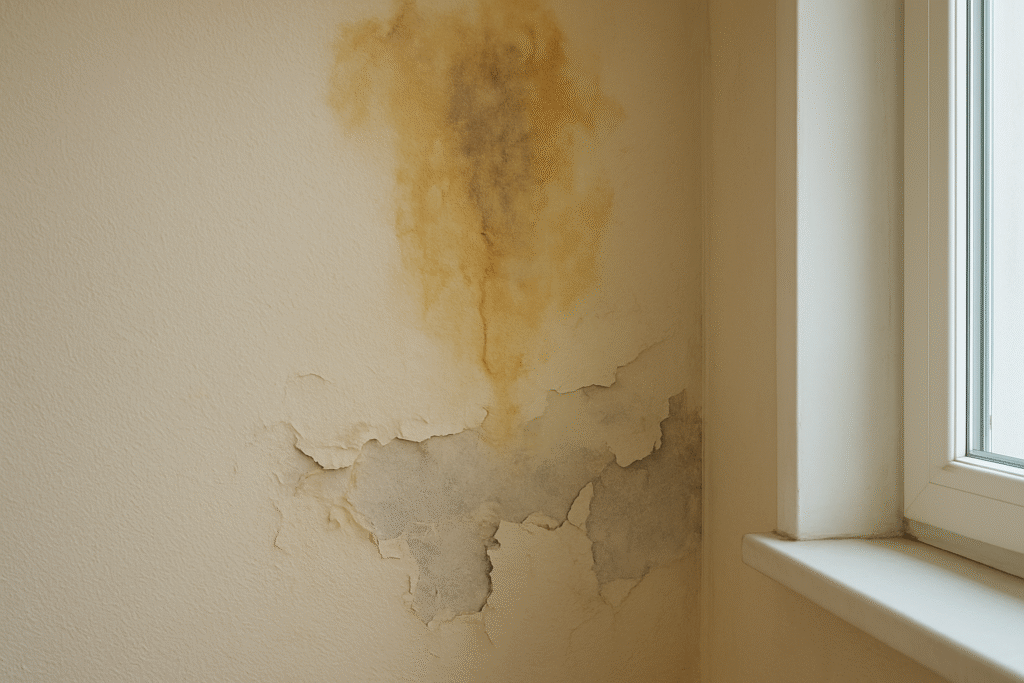
Water is mold’s best friend. Even if a water leak happened weeks or months ago and the surface feels dry now, the moisture trapped behind the wall or under the floor could have been enough to start a hidden mold colony. That’s why visible signs of past or present water damage are critical clues.
What to look for: Keep an eye out for subtle changes on your walls, ceilings, and floors:
- Water Stains: Often yellowish or brownish rings or blotches on ceilings or walls. They might seem faint, but they indicate water has been present.
- Discoloration: Any unexplained darkening or change in color on drywall, wallpaper, or wood trim, especially near plumbing fixtures, windows, or rooflines.
- Peeling, Bubbling, or Cracking: Paint or wallpaper that is lifting away from the wall is a classic sign that moisture is trapped underneath. Drywall might also appear bowed or swollen.
- Efflorescence: While not mold itself, these white, chalky mineral deposits on concrete or masonry walls (common in basements or garages) indicate that water has migrated through the material, potentially creating damp conditions behind it.
Why it’s a hidden sign: It’s easy to dismiss a small water stain as “just an old leak” or paint peeling as “normal wear and tear.” However, these are often the visible symptoms of a hidden moisture problem that is actively feeding mold growth behind the surface. The stain you see might just be the tip of the iceberg.
Don’t just paint over it: Simply covering up a water stain or peeling paint without addressing the underlying moisture source and checking for mold is like putting a bandage on a broken arm. You’re hiding the symptom, not fixing the problem. Investigate any sign of water damage immediately.
Sign #3: Warped, Cracked, or Bowing Walls and Floors
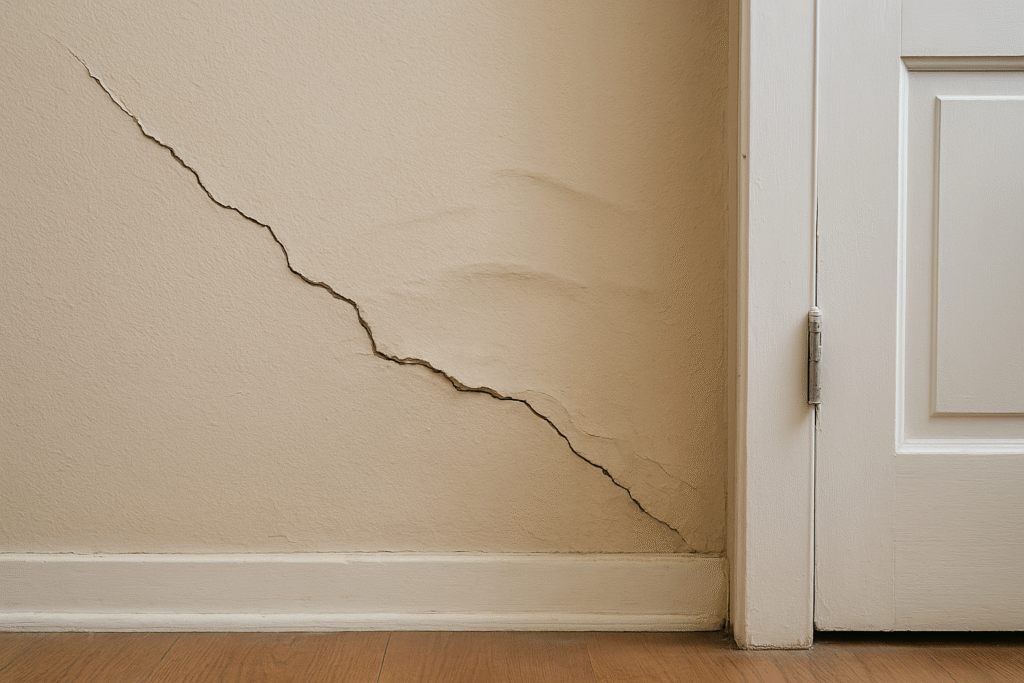
Significant, hidden moisture doesn’t just invite mold; it physically damages the materials that make up your home. Drywall, wood framing, and subflooring absorb moisture like a sponge. As they become saturated over time, they can warp, swell, crack, or lose their structural integrity.
What specific changes indicate a problem? Look for subtle but persistent structural shifts:
- Warped Walls or Ceilings: Sections of drywall that no longer look perfectly flat, appearing slightly bowed or wavy.
- Cracked Drywall or Plaster: Cracks appearing, especially near corners, window frames, or areas where moisture might accumulate.
- Buckling or Soft Floorboards: Wood flooring or subflooring that feels spongy underfoot, or floor tiles that become loose or cracked without obvious cause.
- Sticking Doors or Windows: Doors or windows that suddenly become difficult to open or close can indicate that their frames have swollen due to moisture absorption.
Why it points to hidden mold: These structural changes are almost always caused by prolonged exposure to moisture – the very condition mold needs to thrive. While you might only see a warped wall, the unseen side of that drywall, or the wooden studs behind it, could be covered in mold. The structural damage is the symptom; the hidden moisture and potential mold colony are the underlying disease.
Don’t assume it’s just “settling”: While minor settling can occur in homes, significant warping, cracking, or buckling, especially when localized to one area, is rarely normal. It warrants immediate investigation. These are signs that water is getting in somewhere it shouldn’t, creating a perfect hidden habitat for mold.
Sign #4: Unexplained Allergy Symptoms or Health Issues

Are you or your family members suddenly experiencing persistent allergy-like symptoms that seem worse when you’re at home? While pollen, dust, or pet dander are common culprits, hidden mold growth could be the invisible trigger. Mold releases microscopic spores into the air, and inhaling these spores can cause a range of health issues, especially for sensitive individuals, children, and the elderly.
What kind of symptoms should raise suspicion? Pay attention if these issues appear or worsen indoors and improve when you leave the house:
- Respiratory Problems: Persistent coughing, wheezing, shortness of breath, or asthma attacks that seem more frequent or severe.
- Nasal and Sinus Congestion: Chronic stuffy or runny nose, sneezing fits, and sinus headaches that don’t seem to go away.
- Eye Irritation: Itchy, watery, or red eyes.
- Skin Irritation: Unexplained rashes, hives, or itchy skin.
- General Malaise: Fatigue, headaches, difficulty concentrating, or recurrent sore throats that lack another obvious cause.
Why mold is often overlooked as a cause: These symptoms are very general and easily mimic those of a common cold, seasonal allergies, or other environmental sensitivities. People often spend months treating the symptoms without ever suspecting that the root cause is poor indoor air quality due to hidden mold.
Don’t just treat the symptoms, investigate the cause: If you’re experiencing ongoing, unexplained health issues that seem linked to being in your home, it’s crucial to consider mold as a potential factor. Consulting with your doctor is important, but so is inspecting your home environment. A professional mold inspection, including air quality testing, can definitively determine if elevated mold spore levels are contributing to your health problems.
Sign #5: Increased Humidity & HVAC Issues
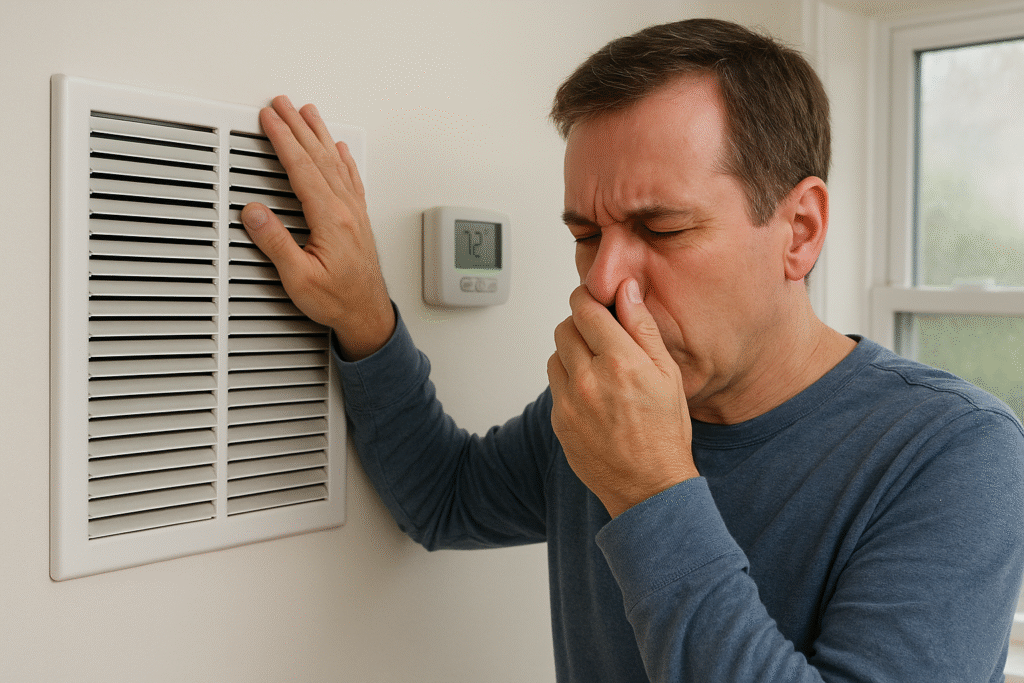
Your home’s Heating, Ventilation, and Air Conditioning (HVAC) system is your primary defense against Florida’s humidity. It doesn’t just cool the air; it removes moisture. If your system isn’t working efficiently, or if there’s a problem within the ductwork, it can inadvertently become a breeding ground or distribution network for mold.
What HVAC-related signs should alert you?
- Increased Indoor Humidity: Does your home feel persistently damp or sticky, even when the A/C is running? This could mean your system is improperly sized, failing, or that there’s excessive moisture infiltration elsewhere that the A/C can’t keep up with. High humidity indoors (consistently above 55-60%) is a major risk factor for mold.
- Condensation: Noticeable condensation on window panes, pipes, or even on A/C vents themselves can indicate excessive moisture in the air or issues with insulation.
- Musty Odor Specifically from Vents: If the musty smell we discussed earlier is strongest when the A/C or heat turns on, or seems to be coming directly from the vents, it’s a strong indicator that mold may be growing inside your ductwork or around the air handler unit.
- Visible Mold on Vent Covers: While not exactly “hidden,” people often overlook or simply wipe away small dark spots on vent covers without realizing it’s a symptom of a larger problem within the system.
Why the HVAC system is critical: If mold takes hold within your HVAC system (on the coils, in the drain pan, or lining the ducts), the system itself becomes a super-spreader. Every time it runs, it blows mold spores throughout your entire home, potentially creating multiple mold colonies and severely impacting indoor air quality.
Regular maintenance is key: Don’t neglect your HVAC system. Regular professional inspections and maintenance, including cleaning the coils and drain pan and inspecting the ductwork, are crucial preventative measures. If you suspect mold in your system, do NOT run it until it has been professionally inspected and cleaned. Running a contaminated system is the fastest way to spread the problem.
Don’t Ignore the Signs: Taking Action Against Hidden Mold
Recognizing the hidden signs of mold is the first, crucial step toward protecting your home and your family’s health. That persistent musty smell, the subtle water stain, the slightly warped wall, unexplained allergy symptoms, or issues with your HVAC system – none of these should be ignored. They are your home’s early warning system, signaling that a hidden moisture problem may be fostering mold growth out of sight.
Especially in a humid climate like Florida’s, proactive attention is key. Ignoring these signs allows mold colonies to grow larger, potentially causing more extensive damage and increasing health risks. The most important takeaway is to investigate any suspicion immediately. Don’t wait for visible mold to confirm your fears.
What’s the next step? If you’ve noticed one or more of these hidden signs in your home, the safest and most effective course of action is to contact a certified mold inspection professional. They have the tools and expertise (like moisture meters, thermal imaging, and air quality testing) to pinpoint hidden moisture sources and confirm the presence and extent of mold growth.
Ready to find a trusted expert in your area? Limpira connects you with top-rated, verified mold inspection and remediation specialists across Florida. Use our directory to find qualified professionals near you and take the first step towards ensuring your home is safe, healthy, and mold-free. Don’t delay – address the hidden signs today.
Comments